
What Actually Happens When You Order Flowers Online
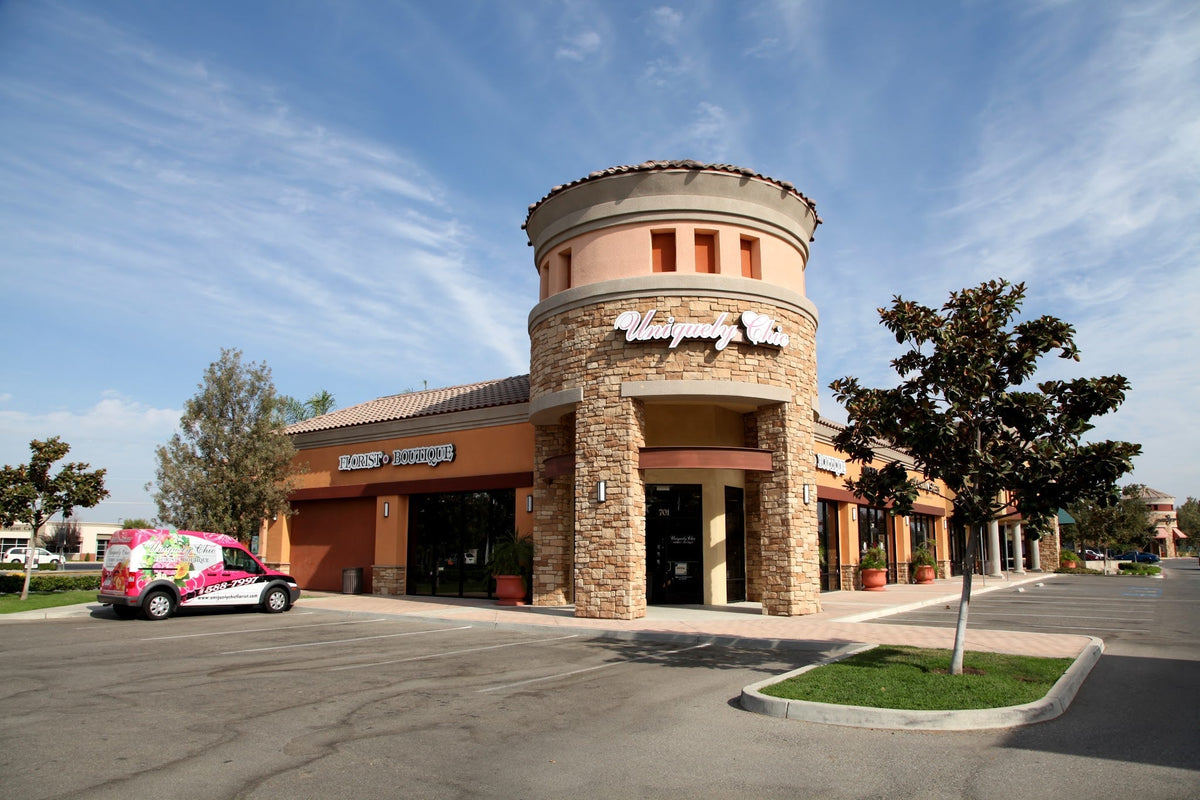
You search for flower delivery in Bakersfield. You click the first result. You pick a photograph of an arrangement you like, pay eighty dollars, and the flowers turn up looking like a smaller, thinner version of the picture.
That gap has a cause, and it is worth understanding before you order flowers again - whether you order them from us or from anyone else.
Most flower websites are not florists
A large share of the sites that rank for "flower delivery" in any given city do not own a cooler, a workbench or a van. They are order gatherers. You place an order with them, they take a cut, and they pass the rest to a real shop somewhere near the delivery address to actually build and drive it.
That local shop is sometimes excellent. Sometimes it is whoever was still accepting relayed orders at 3pm. You do not get to know which, because you never learn their name.
This is not a scandal. It is a business model, and it has been around since the 1910s, when it genuinely solved a problem - there was no other way to send flowers to another city. What has changed is that a website is no longer the hard part, so the middle layer collects a fee for something you could now do yourself in about thirty seconds.
Where the money actually goes
Take an eighty dollar order placed through a national site. Broadly, and it varies:
- A service or delivery fee is added at checkout - often twelve to twenty dollars.
- The gatherer keeps a percentage of the remainder as commission.
- What is left is what the local shop receives to buy the flowers, build the arrangement, pay a designer and drive it across town.
So the shop building your flowers is frequently working with something closer to half of what you paid. They are not cutting corners out of spite. They are building to the money that reached them.
The same eighty dollars placed directly with a local shop is eighty dollars of flowers, labour and delivery. That is the entire difference, and it is most of why the photograph and the doorstep do not match.
The "as shown" problem
Every flower website in the world uses photographs of arrangements built in a studio, at peak season, by a stylist, with unlimited stems. Ours included - though the arrangements in our photographs are ones we actually built, in our shop, and we try to shoot what we genuinely send.
The honest position is this: flowers are agricultural. What is at market on a Tuesday in February is not what was at market the day that photograph was taken. Any florist who promises an exact match to a picture, every day of the year, is either overcharging to cover the risk or about to disappoint someone.
What a good shop should promise instead is the look - the colour story, the scale, the feel - built from what is genuinely good that morning. That is what a substitution policy is for, and you should be able to find one before you order.
Why substitutions happen at all
Because a grower had a bad week. Because a shipment came in soft and we sent it back rather than pass it on. Because the market simply did not have white peonies in October, and no amount of wanting them changes that.
When we substitute, the rule we work to is equal or greater value, same colour story, same overall shape. If we cannot honour the feel of what you chose, we call you. That call is not fun for anyone, but it is a lot better than a doorstep surprise.
How to tell whether you are ordering from a real local shop
This is genuinely useful whether or not you ever order from us. Before you check out, look for:
- A street address you can find on a map. A real shop has a building. If the site only lists a city, that is a signal.
- A local phone number that a human answers. Call it. If you reach a call centre that cannot tell you what is in the cooler today, you are not talking to the shop.
- Photographs of their own work, ideally including work that is a bit imperfect, seasonal, or clearly shot in a real space.
- A specific delivery cutoff and delivery area. Vagueness here usually means somebody else is doing the driving.
- A named designer or owner. Shops that build their own work tend to say who does it.
If you want to skip all of that: search the florist's name plus the city, find their own website rather than the aggregator, and call them.
To be fair, when a wire service does make sense
There are real cases. If you need flowers in a town where you know nobody and cannot find a local shop, a relay service will get the job done. If you are sending to a small rural area with no florist at all, a national network may be the only route. And some of them have genuinely useful reminder and subscription tools that small shops do not offer.
The argument here is not that they are villains. It is that when there is a real shop in the city you are sending to, going through a middle layer costs you money and control for no benefit you can point to.
What ordering direct actually gets you
At our shop it means the person who takes your call is the person who builds the arrangement or works ten feet from whoever does. We buy fresh every morning. Nothing sits in a cooler for a week waiting to be sold. If you tell us it is for a woman who hates carnations, we will remember, because we wrote it down and we are the ones building it.
It also means that if something is wrong, you call one phone number and reach the people who can fix it that day. There is no ticket, no relay, no shop in another state explaining that the local partner is responsible.
The short version
Whoever you order from, order from the actual shop. Find their address, call their number, and ask what is good this week. You will spend the same money on more flowers, and you will know who is standing at the bench.
We are on Brimhall Road in Bakersfield. (661) 588-7997, and someone who builds arrangements will answer.
See what we have in the shop or read about how we work.
Order by 12pm and we deliver across Bakersfield the same afternoon, built by hand that morning.